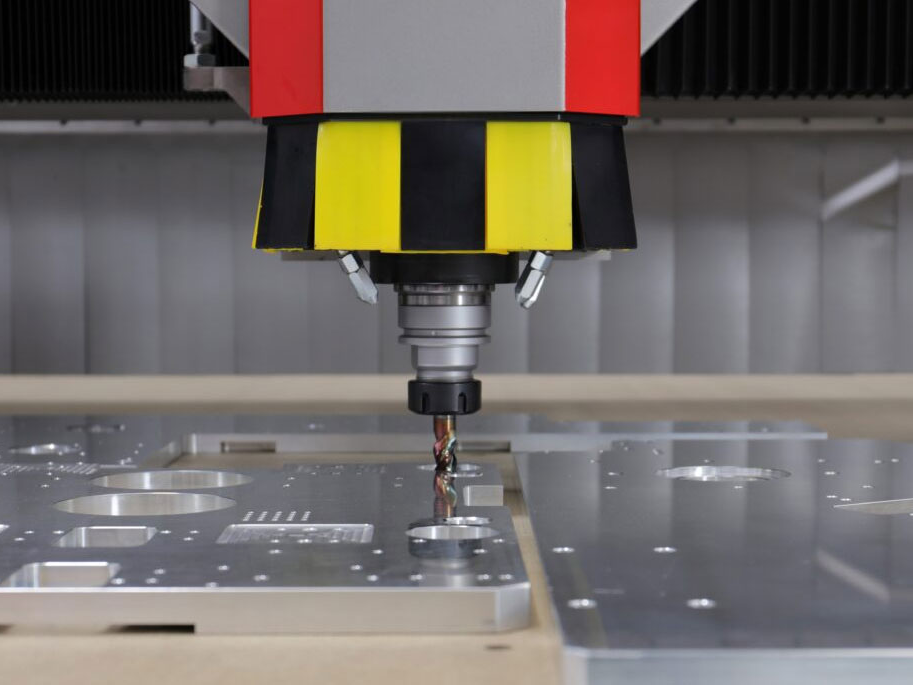
Titanium is an incredible material, but working with it can be a real challenge. Advanced tools are necessary to achieve high-quality results. A cnc milling machine for titanium is the ultimate solution for dealing with the hardness and peculiarities of this metal, ensuring precision and reliability. If you’re looking to elevate your production, improve the finish of your components, or simply understand how to master titanium machining, you’re in the right place.
In recent years, the use of titanium has exploded in key sectors such as aerospace, medical, and high-end automotive. Its exceptional resistance to corrosion, high strength-to-weight ratio, and biocompatibility make it indispensable for critical applications. However, these same properties make its machining extremely complex. Titanium is known for its hardness, tendency to work harden, and low thermal conductivity, factors that demand specific machine tools and a targeted approach. In this article, we’ll guide you through selecting the ideal CNC milling machine for titanium, analyzing the challenges, solutions, and providing an overview of considerations, to help you make a strategic and profitable investment.
1. The Challenge of Titanium: Why CNC Machines Are Indispensable
Working with titanium presents unique challenges that traditional machine tools struggle to handle. Its intrinsic hardness, combined with low thermal conductivity, means that the heat generated during cutting tends to concentrate on the tool and workpiece instead of dissipating. This can lead to rapid tool wear, material work hardening (making it even harder), and poor surface finishes. Additionally, titanium tends to “stick” to the tool, causing vibrations and instability in the cutting process.
Have you ever felt frustrated by the difficulty of achieving clean and precise cuts on hard materials? It’s a common feeling when tackling titanium with inadequate equipment. The good news is that a cnc milling machine for titanium is specifically designed to overcome these obstacles. Thanks to precise digital control, these machines allow you to manage optimized cutting speeds and feeds, utilize tools with specific geometries and materials, and implement advanced cooling systems. The result is the ability to work titanium with minimal tolerances, achieving high-quality components, reducing waste, and significantly increasing tool life.
2. Essential Features of a CNC Milling Machine for Titanium
When choosing a cnc milling machine for titanium, focusing on specific features that make it suitable for this challenging material is essential. The first and most important is structural rigidity. Titanium requires high cutting forces, so the machine must be constructed with robust materials (often high-quality cast iron) and have a design that minimizes vibrations. A solid structure ensures that the machine can withstand stresses without deforming, thus ensuring the required precision.
Another crucial aspect is spindle power and torque. Unlike aluminum, titanium requires a spindle capable of delivering high torque at low speeds, to handle deep cuts and remove material efficiently without overheating the tool. Spindle speed (RPM) is important, but for titanium, the ability to maintain constant torque is often more critical. Consider a company producing titanium prosthetic implants. Precision is fundamental, and a powerful and controlled spindle allows for milling complex anatomical shapes with impeccable surface finishes, essential for biocompatibility and patient comfort.
Furthermore, an effective cooling system is non-negotiable. Titanium generates a lot of heat during machining. A machine equipped with a high-pressure cooling system, with strategically positioned nozzles to direct the fluid directly on the tool and cutting point, is essential to dissipate heat, lubricate, and remove chips. Without adequate cooling, the tool will wear quickly, and the workpiece’s quality will suffer significantly. Finally, the quality of drives and guides (often ball screws or high-precision linear guides) ensures smooth and precise movements, crucial for machining hard materials like titanium.
3. Tools and Cutting Parameters: The Key to Machining Titanium
Choosing the right tool and defining the correct cutting parameters are as important as the machine itself when working with titanium. Have you ever found yourself having to choose between dozens of milling cutters without knowing which was best for your material? It’s a common situation, but for titanium, certain guidelines are fundamental. Tools for machining titanium are typically made of high-density tungsten carbide and often feature special coatings (such as TiCN, AlTiN, or DLC) to increase heat and wear resistance.
Tool geometry is equally critical. For titanium, cutters with a reduced number of flutes (often 2 or 3) and a pronounced positive rake angle are preferred. This reduces cutting force and helps prevent material work hardening. The flutes are generally wider and with a more pronounced helix to facilitate chip evacuation, thus preventing buildup and overheating. Consider a company that produces components for the aerospace industry. They need to machine titanium alloys to create lightweight yet extremely strong structural parts. By using specific cutters with advanced coatings and a reduced number of flutes, they can achieve clean, precise cuts, reducing stress on the material and extending tool life.
Cutting parameters are equally crucial. Cutting speeds for titanium are generally lower than those used for aluminum or steel. The feed rate must be sufficiently high to ensure that the tool penetrates the material and removes a continuous chip, thus avoiding overheating and work hardening. The depth of cut is another parameter to be carefully managed: often lighter cuts are preferred, albeit with a higher feed, to maintain control over temperature and cutting forces. The correct combination of machine, tool, and cutting parameters is the true art of titanium machining.
4. Machine Tools for Advanced Titanium Processing: Beyond Milling
When it comes to working with titanium, machine tools for advanced titanium processing go beyond simple milling. These are integrated systems that consider all facets of working with this complex metal. This includes not only high-performance CNC milling machines but also technologies such as precision grinding, advanced turning, and in some cases, non-conventional processes like electrical discharge machining (EDM) for particularly difficult geometries to achieve with traditional methods.
Have you ever wondered how titanium dental implants or the internal components of a luxury titanium watch are made? They often require a combination of techniques. A cnc milling machine for titanium can create the rough shape, but to achieve the micrometric tolerances and mirror-like surface finishes needed in medical fields or for high-end watch components, subsequent precision grinding or polishing may be necessary. Machine tools for advanced titanium processing often integrate these different technologies into a single optimized workflow.
Consider a company that produces titanium turbine components for aircraft engines. These parts require extremely precise aerodynamic shapes, with smooth surfaces to minimize air resistance and ensure engine efficiency. A 5-axis CNC milling machine, combined with advanced CAM software and specific tools, can create these complex shapes. However, to ensure maximum durability and fatigue resistance, additional surface treatments, such as specific heat treatments or shot peening, may be necessary, fitting into the broader concept of machine tools for advanced titanium processing. The goal is to not only achieve the correct shape but also develop optimal mechanical and surface properties for the final application.
5. Maintenance and Care: Ensuring Your Machine’s Longevity
Buying a cnc milling machine for titanium is a significant investment, but ensuring its maximum efficiency and longevity requires dedicated maintenance. Titanium, with its tendency to generate fine and abrasive chips, requires meticulous and regular cleaning. Have you ever considered how much titanium chips can damage guides and mechanical components if not promptly removed? It’s a serious issue that can compromise machine precision.
A daily maintenance routine should include thorough cleaning of the work area, guides, and chip evacuation systems. The use of specific brushes, compressed air, and industrial vacuums is essential. Additionally, the cooling system, vital for titanium machining, must be kept efficient. Regularly check the coolant levels, cleanliness of filters, and proper functionality of nozzles. Contaminated fluid or an inefficient cooling system can lead to overheating, premature tool wear, and surface finish problems.
Consider a workshop that machines titanium for medical devices. Cleanliness is not just a matter of efficiency but also of hygiene and contamination prevention. Scheduled preventive maintenance, including periodic checks of all mechanical, electrical, and hydraulic components, is crucial. Replacing filters, checking belts, verifying the tension of ball screws, and periodically calibrating the machine according to the manufacturer’s specifications will ensure that your cnc milling machine for titanium continues to operate with the highest precision and reliability, protecting your investment, and guaranteeing the quality of your finished products.
6. Maximizing Productivity with the Right Strategies
Efficiently working with titanium requires more than just a good machine; it demands intelligent strategies to maximize productivity. Have you ever wondered how some shops produce titanium components at record speeds and competitive costs? It’s often a combination of advanced technology and optimized approaches. Using sophisticated CAM (Computer-Aided Manufacturing) software is fundamental. These programs allow generating optimized tool paths, minimizing non-cutting times, reducing vibrations, and maximizing material removal safely.
Consider a company that needs to produce a series of complex titanium components. By using advanced CAM software, they can simulate the entire machining process before even starting the machine. This allows for identifying potential collisions, optimizing tool paths to reduce cycle times, and choosing the most suitable tools. Integrating CAM software with the cnc milling machine for titanium is essential for a smooth and efficient workflow.
Another crucial aspect is automation. Using quick automatic tool changers, high-precision rotary tables, and automatic piece loading/unloading systems can drastically reduce downtime between operations. Imagine needing to produce hundreds of titanium components: every minute saved in tool changes or workpiece repositioning translates into a significant productivity increase. Machine tools for advanced titanium processing often integrate these automation solutions to offer an efficient and scalable production system. Choosing the right strategy, combining a high-performing machine with intelligent software and automation, is the key to excelling in titanium machining.
7. Choosing the Right CNC Milling Machine for Titanium: A Fundamental Step
CNC milling machines for titanium are indispensable tools for anyone operating in sectors where this material is crucial. We’ve explored the unique challenges of titanium machining, the essential features of a suitable machine, the importance of tools and cutting parameters, the role of machine tools for advanced titanium processing, and considerations regarding the purchase of a cnc milling machine. Choosing the right machine is a strategic investment that will directly influence your product quality and operational efficiency.
Remember:
- Assess your application: Identify clearly the type of titanium components you need to produce, their sizes, required tolerances, and volumes. This will guide your choice towards the most suitable machine.
- Don’t underestimate rigidity and cooling: For titanium, these characteristics are non-negotiable and determine the quality of the cut and tool life.
- Consider the total cost of ownership: Beyond the purchase price, evaluate operating costs, maintenance, tools, and supplier technical support.
Start researching the models that best suit your needs today. Request detailed quotes, compare technical specifications, and, if possible, request practical demonstrations. Choosing your next cnc milling machine for titanium is a fundamental step to ensuring success in machining this extraordinary material.